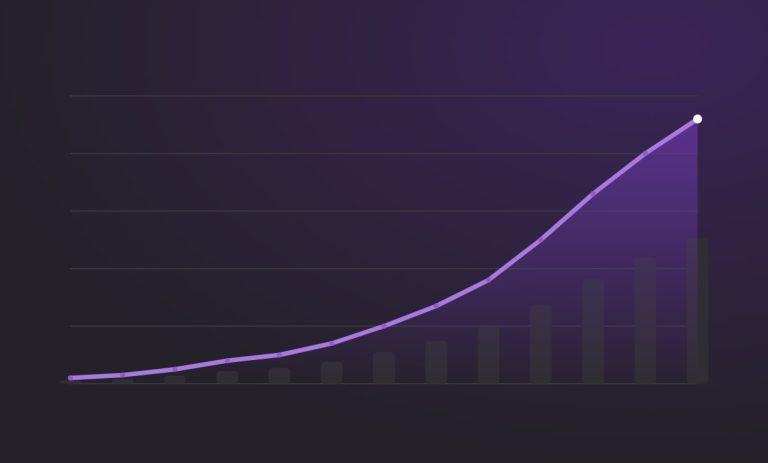
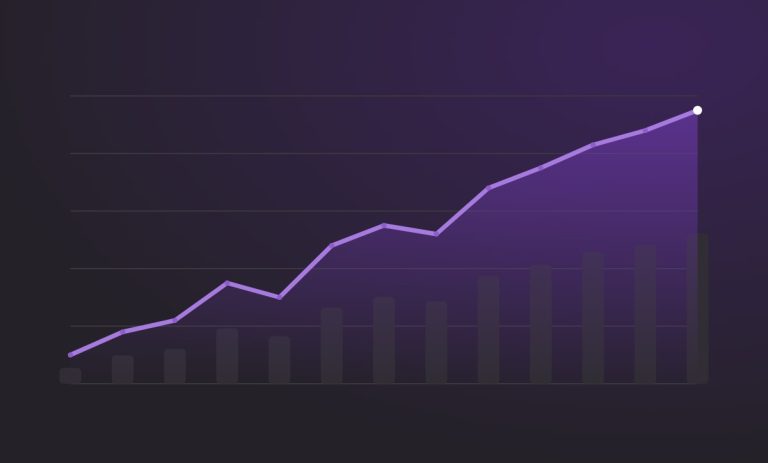
A developer of B2B solutions for FMCG manufacturers works in Europe and global markets, and in spring 2024 its site got a few dozen visits a month from search. After the product pages were optimised, search traffic grew about 20 times in a little over two years, to about 1,000 visits a month by the Ahrefs estimate. This is a story about starting with the pages that sell in a narrow niche, and only then going deep into one topic.
Results at a glance
Search traffic
20x
Ahrefs estimate, March 2024 → June 2026, from a few dozen to about 1,000 visits a month.
Site mentions a month in AI Overview and ChatGPT
20+
DataForSEO, US. In August 2025 there were only isolated mentions.
Main searches in Google’s top 10
~40%
May 2026. Another 15% of the main searches are in the top 3, and the target page holds steady there.
Traffic and rankings are taken from Ahrefs’ public data for the period of our work, because we don’t publish screenshots of our clients’ analytics. Ahrefs estimates traffic using its own index, so the traffic figures are estimates. The values are read off the chart and rounded up. AI mentions are counted by DataForSEO, whose history starts in August 2025. We don’t name the client under the terms of our contract.
Before
Several products for FMCG and a few dozen search visits a month
| Client | A developer of B2B solutions for FMCG manufacturers (name under NDA) |
| Niche | B2B software for FMCG manufacturers and distributors |
| Markets | Europe and global markets, English version of the site |
| Services | SEO, content strategy, link building, analytics |
The company makes several B2B products for FMCG, and its buyers are manufacturers and distributors.
In March 2024 the site got a few dozen visits a month from search, by the Ahrefs estimate.
Already in place were several language versions, product pages, a blog of a few dozen articles and PDF guides behind a form.
The goal
Get into the tender that starts on Google and in LLMs
A big FMCG manufacturer announces a tender for B2B software, and its procurement team looks for vendors to invite, including on Google and in AI assistants. The aim of the project was for buyers like these to find the site, along with smaller manufacturers that need the same thing.
What we did
Product pages first, then one topic in depth, then wider
March – September 2024
Pages that sell first, the blog later
In short, we started with the pages that sell, which meant setting up analytics, collecting keywords for both names of the market (FMCG and CPG) and reoptimising the solution pages and the homepage. The texts went live at the end of the stage, so the effect came in the next one.
Analytics before the start
Without tracking, SEO only measures traffic, and to decide which pages to strengthen you need to see which ones bring enquiries. So we started by setting up analytics and running a technical audit.
A cluster for each page
Each solution page needs its own cluster, so the pages don’t compete with each other. Still, in a niche where keywords are scarce and not obvious, the best search by the numbers may not sound the way buyers talk. So for the solution pages we offer keywords as several cluster options, for the client to pick the one that sounds like its buyers.
Does SEO make sense
In a narrow B2B niche with unclear keywords, the answer to “is search worth investing in” isn’t obvious. So at the start we ran a competitor analysis to check whether the niche has enough traffic for SEO/GEO to make sense, how frequently competitors publish and how much link work it would take to catch up.
Outcome. Within the stage the Ahrefs estimate barely moved, because the texts and markup went live a few weeks before it ended. The effect came in the next stage.
October – December 2024
A focus on one product, the main one
The solution pages started bringing in traffic. We built a plan around where the traffic in the niche is and prepared a start that wouldn’t overload the client’s team.
From a page to a topic
A solution page answers someone who already knows what they need, while most of the search in the niche happens at earlier stages, where a potential lead is still working out how to solve their problem. After optimisation the client’s pages already ranked well for their searches, so we built next year’s plan around where the traffic is, and besides head-on topics with the product name we took on the upper levels of the funnel.
Preparation without a questionnaire
Before content work starts we ask the client to describe the product, the buyers’ pains and the solutions. There is another way, where we bring topics from competitors, and the client weeds out the unsuitable ones and explains why. That’s the way we went here, so as not to load the client’s team.
Outcome. The Ahrefs estimate doubled in a month and held until the end of the stage. This is the effect of optimising the solution pages in the previous stage.
January – June 2025
One topic in depth, with the blog working for the main product’s page
We took one topic in depth, everything related to the main product, ran the blog so that every article worked for its page, took on the blog archive and started guest posts. Traffic almost doubled by the Ahrefs estimate.
General articles working for the main product
We built the content plan around four directions, and each article mentions the solution naturally and links to the product pages we were promoting.
The blog archive at work
The client’s blog already had an archive of articles and a lead magnet, so we started with what could bring results fastest. An article that already shows up for keywords is quicker to lift than a new one is to grow, so from the archive we took exactly those and wrote reoptimisation briefs for them. We opened the lead magnet up to search and reoptimised it for its cluster, and closed one of two sections with similar content from indexing.
Guest posts
For the client’s brand, it matters both where a link comes from and what its name appears next to, because a topical publication gives more than a random site, and sites with off-topic themes like casinos are best avoided. So we placed guest posts through outreach on topical sites (retail, business, technology, logistics) and checked the sites for topic, off-topic content and SEO metrics.
Outcome. The Ahrefs estimate grew 1.9 times over the stage.
July – December 2025
A second product and briefs built around AI Overviews, as traffic plateaued and AI mentions grew
We took on the company’s second product. Together with the client we created new articles for it, added AI Overview analysis to the briefs and removed the cannibalisation of the main product’s page. Traffic plateaued, while mentions of the site in AI answers grew.
The second product, new articles in place of old ones
When an old article doesn’t show up for any search, there’s nothing to base a reoptimisation on, and it’s simpler to write a new one for a specific search. So for the second product we wrote new articles, and kept the old ones or, where the content duplicated, merged them with a 301 redirect.
AI Overviews without a template
From what we’ve observed, pages from the top 15, mostly the top 10, make it into AI Overviews, and the overview’s structure hints at which questions to cover. So we added AI Overview analysis to the briefs. One of the articles made it into an AI Overview a day (!) after publication.
Outcome. The target page holds firmly in the top 3.
January – May 2026
Several products and the fastest publishing pace doubled traffic in five months
The client published faster than at any point before. We moved some of the links into listicles and put the redirects in order; traffic doubled.
Briefs for several products
The content plan grew to cover several of the company’s products. For each of them we wrote briefs for new articles with an AI Overview analysis and reoptimised existing ones.
Redirects without losses
The root URL sent visitors to one of the language versions with a temporary 302 redirect. English is the version that matters for search, so we recommended a permanent 301 to it and provided a list of internal links going through 301s to replace.
Outcome. About 40% of the main searches are in the top 10 and 15% in the top 3; over 20 mentions in AI answers (DataForSEO, US sample). The Ahrefs estimate grew 2.1 times over the stage, and about 20 times over the whole period of the case.
After
The site is found on Google and in AI answers
| Before | After |
|---|---|
| A few dozen search visits a month (March 2024) | About 1,000 search visits a month |
| Isolated mentions of the site in AI Overview and ChatGPT answers (August 2025) | Over 20 mentions a month |
By the Ahrefs estimate, search traffic grew about 20 times in a little over two years. Most of the gain came in 2026, when it doubled in five months.
According to DataForSEO, mentions of the site in Google AI Overview and ChatGPT answers grew from isolated ones to over 20 a month.
Why it worked
Three decisions the growth rests on
Product pages first
We optimised the solution pages and the homepage before the blog, before a single article from our briefs, and they brought the first doubling of traffic.
One topic, in depth
We started with one product, the main one, and everything around it, from head-on searches to the upper levels of the funnel.
Briefs with AI Overview analysis
We added AI Overview analysis to each brief, and mentions of the site in AI answers grew to over 20 a month.
Takeaways
Three lessons for B2B software in a narrow niche
- Start with the product pages. Solution pages answer the people who already know what they need. Here the first doubling of traffic came after they were optimised, before the first blog post went up.
- Analyse enquiries by funnel stage. It’s very important to analyse leads that convert in different ways and see which way works better, even though in analytics they can look the same.
- Check traffic against pipeline. Agree before you start on what counts as a result, and every quarter look at how many enquiries the growing pages bring in.
Questions
What people ask about this case
Where do the numbers in this case come from?
Traffic is the Ahrefs estimate, with values read off the chart and rounded up. AI mentions are counted by DataForSEO, from August 2025. We don’t give the client’s name or domain under the terms of our contract.
Why product pages first and the blog later?
A solution page answers someone who already knows what they need, so it is the closest to an enquiry. Here the Ahrefs estimate doubled after the solution pages were optimised, before the first article from our briefs.
How do you get into AI Overview answers?
From what we’ve observed, pages from the top 15, mostly the top 10, make it in, and the structure of an AI Overview hints at which questions to cover. That’s why we add AI Overview analysis to each brief.
How do you tell whether traffic brings in enquiries?
Enquiries depend on who exactly the pages bring in, and visitor numbers don’t show that. That’s why search should be checked against sales.