An online community for IT professionals run by a global IT services company. We took it on when the site had just launched and search couldn’t see it. The articles were written by practising engineers, and that became the project’s main strength; later we rebuilt the work itself around their pace.
Results at a glance
Search visits a month
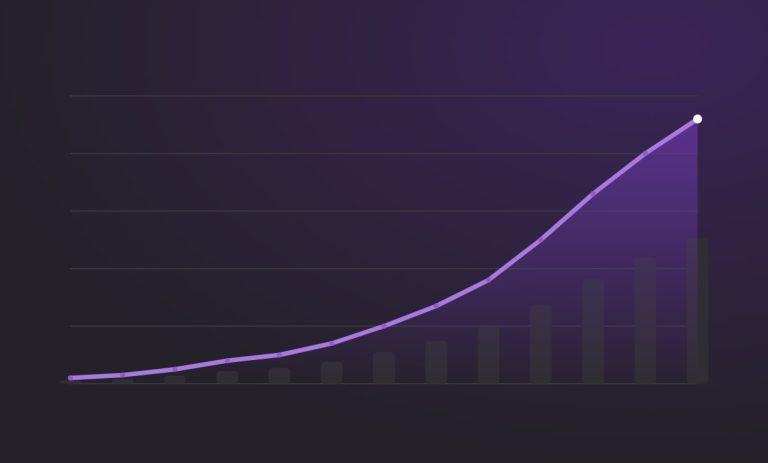
0 → ~5,000
Ahrefs estimate, May 2022 → July 2024, the last month of our work.
Search traffic year on year
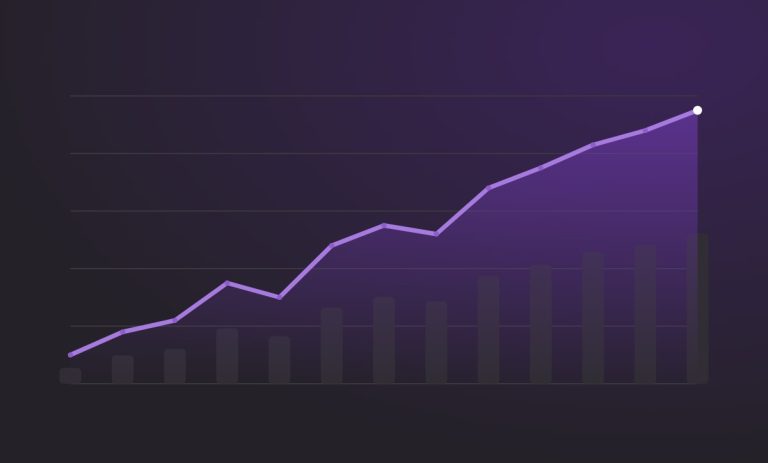
×5+
Average Ahrefs estimate for April–June 2024 against the same months of 2023.
Traffic figures come from Ahrefs’ public data for the period we worked on the site, since we don’t publish screenshots of client analytics. Ahrefs estimates traffic from its own index, so the traffic figures are estimates. They aren’t readings from the site’s own analytics. We don’t disclose the client’s name, so the figures are rounded.
Before
The articles existed, but search couldn’t see them
| Client | An online community for IT professionals run by a global IT services company |
| Niche | learning community for IT professionals |
| Markets | US and English-speaking markets, plus other language versions of the site |
| Services | SEO strategy, briefs for expert articles, technical support, link building |
| Period | May 2022 – July 2024, 27 months |
| Status | completed |
| Team | an SEO lead, SEO specialists, an outreach manager and a project manager |
The community for people in tech was set up by a global IT services company. The site has courses, career materials, job openings and a blog written by practising engineers. The client’s goal was to bring a junior into the community, where they’d learn and grow into a mid-level engineer.
At the start the site had just launched, and Ahrefs saw no search traffic for it at all. It was a young site with technical problems that still had to be solved.
Content did exist, though. Some articles were already live in several languages, and there was a topic plan. What was missing was everything that turns an article into a page people can find.
The goal
Juniors who stay in the community
A junior developer with two years of experience is stuck in the same role and thinking about DevOps. They don’t need a definition. They need a route to the new role. If that route is written by a practitioner from the community, the next step is a course or another of the community’s programmes.
That’s what the client wanted, meaning traffic to articles, and new community members from that traffic. The constraints were clear from month one:
- articles are written by experts in their own style, so to them a brief serves as a guide;
- every topic came out in several language versions;
- the site had almost no links, so the bet was on content;
- the new site’s technical base still needed fine-tuning, which happened in stages.
What we did
A pipeline for practitioner-authors first, then focus and links
Our work fell into six stages.
May – October 2022
Six months of content without links on a young site, and search barely saw it
The site was young, with no history and no links, and the client’s experts wrote the articles. We laid the technical foundation, set up briefs for practitioner-authors and started building the content production process.
A technical audit first
The strength of a company’s brand doesn’t carry over to a new domain, so to search engines the community site was a young site with no history, and technical errors hurt a site like that especially hard. Some of the new site’s technical settings still needed fine-tuning, including the canonical tag, which tells search engines which page is the main one. So alongside the first briefs we ran a technical audit and handed it over with a priority table, and after the redesign the client carried out at the end of the stage, we checked the site again.
Briefs for practitioner-authors
An engineer writes an article the way they’d explain something to a colleague, so keywords, structure and headings have to reach them in advance, in a brief that’s easy to use. We wrote the briefs in the terms of the client’s CMS so editors wouldn’t get confused, and built each article’s structure from the search results of the markets it was written for. We checked the client’s topics for demand and suggested the wording people actually search with, because without a demand check an article takes a month of work and brings no one in. We also made sure blog articles didn’t take queries from other sections of the site.
What links would change
Fewer than ten websites linked to the site, which for search engines is next to nobody, so new articles without links sit far from the first page.
What we advised against
We advised against duplicating articles on large industry sites, because search would show the copy on the stronger site and pass over the original; we suggested a translation into another language with a link to the original, or a digest of short previews. For the video and podcast section we recommended adding transcripts, because search engines handle a page without text poorly. We didn’t plan links specifically from sites in a few countries of the region, because there are few quality sites there, and for a site with language versions what matters is the topic and audience of the linking site.
What the client did. Wrote and published articles through its own experts, following its own topic plan. At the end of the stage it refreshed the site design and added descriptions of IT professions.
Outcome. The Ahrefs estimate stayed at no more than a couple of dozen visits a month during the stage, so search barely saw the site.
November 2022 – February 2023
Templates for new sections
Meta tags in each language
Titles and descriptions on the site were duplicated or empty, and untranslated articles appeared in English on the other language versions, so search engines saw a duplicate of the English page and readers got the wrong language. So we gave meta tag recommendations (a title and description for each language version in its own language), rechecked the pages after the fixes and explained why untranslated text shouldn’t be shown on the other language versions.
Templates at the mock-up stage
New sections, course and partner pages and a new blog were in the client’s plans, meaning dozens of pages of the same type, where one template error repeats on all of them. So we supplied templates while they were still mock-ups (pages for the new sections, course pages and partner pages), and checked the new blog mock-ups against our recommendations. What the client did. Fixed titles and descriptions according to our audit, planned the new sections, a new blog and page templates; its experts supplied the topics.
Outcome. The Ahrefs estimate briefly rose to about 2,000 visits a month.
March – July 2023
Topics from experts, and a move to a new way of working
In short, topics came from experts ready to write them, and there were no links yet; at the end of the stage we rebuilt the way we worked.
Topics from experts
When the authors are practitioners, the topic is decided by whoever is ready to write it, and SEO picks the topics with demand from what’s brought in and gives them the wording people search with. We checked the experts’ topics (Web3, soft skills, business analysis, DevOps and Cloud, Java, AI/LLM) for demand in each language, because the same topic can have very different demand in different sets of results, and wrote briefs for the ones that passed.
Sites for the client’s articles
Beyond its own site, the client wanted its experts’ texts to be read by an audience that hadn’t heard of the community yet. At the client’s request we compiled a list of external sites for publication, and how to do it without duplicates we had advised earlier (a translation into another language or a digest linking to the original).
A new way of working
At the end of the stage we turned the project towards English-speaking readers and rebuilt the work itself around that:
- briefs written for the English text, with separate keywords and meta tags for the other language versions;
- topics in clusters, with no more one-off articles;
- links from topical sites.
What the client did. Its experts brought the topics; the client looked for external sites for its articles.
Outcome. The Ahrefs estimate stayed within 1,000 visits a month, and at the end of the stage traffic started to grow.
August – November 2023
English, career clusters and the first links, and traffic almost doubled
We moved to English-language career clusters for the junior who’s stuck and started building links. Traffic almost doubled in four months.
Routes for a stuck junior
We focused on the junior or mid-level engineer who’s stuck. A junior like that has spent two years in the same role, googles “how to become a DevOps engineer” and looks for a route (what to learn, how long it takes, where to start). So we wrote briefs in English only and for English-language results, and grouped topics into career-path clusters (Data Science, DevOps with a pillar article on the career path, QA and test automation), which create entry points for all the related questions and build Topical Authority.
Several clusters in parallel
Clusters can go one at a time, a month per profession. When you write out a whole cluster in a month, though, the plan also picks up topics where stronger sites are in the way, and a site with a live audience can’t publish only about DevOps for a month. So we ran several clusters in parallel, starting with the least competitive topics; the career clusters went in order, while published articles alternated between clusters.
Links from topical sites
The community needed sites with real traffic and an audience like its own, meaning people in tech building a career, because a link like that brings people. So we prepared guest articles and link insertions into existing posts on topical sites. An insertion sits in an article that already has readers and works straight away, with no waiting for a new post to find an audience.
A technical audit before scaling
The new audit found three critical flaws:
- the canonical tag on pages with URL parameters confused search engines about which version of a page was the main one;
- relative URLs in scripts were generating 404 pages;
- when an article’s category changed, its URL changed with no 301 redirect, and links to the article led nowhere.
We handed over the audit with a priority table, so that the technical base could keep up with the scale of articles and links.
Outcome. The Ahrefs estimate almost doubled in four months, to about 4,000 visits a month; the growth came from the first career clusters and links.
December 2023 – May 2024
A fall caused by canonical tags and the URL change, and a recovery in three months
Traffic dropped, and we worked out why. The causes turned out to be canonical tags pointing to pages with GET parameters and changed URLs on some old pages. We prepared a redirect map for the URL change and, together with the client’s team, fixed these new technical problems. New guides, links and internal linking brought traffic back above its previous level.
Diagnosis and canonical tags
Traffic fell in a single day, and some pages dropped out of the top 100. We analysed the fall and found new pages with GET parameters that search engines had suddenly started treating as the canonical versions of the pages.
Deoptimisation over deletion
Older author pieces (interviews with developers about their path into the profession and an old article on the same topic) were getting in the way of the new guides, meaning two pages of the site were competing for one query. Deleting them would have meant losing the practitioners’ voices people read the community for, and the site couldn’t yet hold two articles on one topic because it lacked links. So we deoptimised the old articles (keywords came out of the headings and text, and the interviews moved to URLs named after their subjects), while the content and the authors’ voices stayed. Two similar articles by different authors, on the other hand, we advised merging into one that combined both authors’ views.
From a career article to a course
Someone who has just read how to become a data engineer is ready for the next step right then, if the article shows it. So every brief got a path to the community’s offers (a course from the catalogue or another programme where it fitted), and the brief structure gained questions for the expert that bring a practitioner’s real experience into the text. Topics came in clusters (Data Engineering, JavaScript, Cloud, Java, pet projects), and later around the client’s courses too.
Links from outside and from the ecosystem
Closest to the community was the company’s corporate blog, with the same audience of people in tech and a stronger domain, so a link from there brought both weight and readers who already knew the brand. We kept guest posts and insertions into published articles at a steady pace, made some of them anchorless so the link profile looked natural, and at the client’s request measured how linking between the domains performed. We gave internal linking recommendations every month, and the client implemented them.
What the client did. Removed the category from article URLs, added the community’s offers to articles, launched new programme and course pages, reduced image sizes and implemented the internal linking recommendations.
Outcome. The Ahrefs estimate fell below 1,000 visits a month, then within three months climbed past 4,000, above its pre-drop level. The recovery came from new guides, links and the internal linking that went live.
June – July 2024
The bet went on existing pages
In short, we focused on pages that already existed, including a course page. Traffic reached the highest sustained level of our period.
Existing pages over new ones
A course page is closer to the community’s goal than any article, because that’s where people sign up. So we moved part of the effort from internal linking and link planning to re-optimising one of the course pages. For reworking old articles we made a brief template.
The course brand page without cannibalisation
When one brand has both a brand page and pages for individual courses, they can start competing for the same queries. Briefs went to the client’s courses, and we checked the brand page for cannibalisation; branded queries dominated on it, so no changes were needed. We only asked that, when updating the text, the brand name appear noticeably more frequently than the course names, and that drafts come to us for review.
Outcome. The Ahrefs estimate rose to about 5,000 visits a month, the highest sustained level of our period. Over the final months of our work traffic averaged more than five times the level of a year earlier.
What was hard
Practitioners’ voices and what search needs
A practitioner’s living text and the brief
The client’s experts wrote the way they’d explain things to a colleague, and that living text is exactly what a junior comes to the community for. So we finished the SEO side (keywords, headings, an FAQ block) after publication: we built a check of published articles into the monthly cycle and rewrite live texts on the same URLs, leaving our comments in English right in the article text.
After
Search brings in people who are building a career
| Before | After |
|---|---|
| 0 search visits per Ahrefs | About 5,000 search visits a month |
| Almost no links | Links from topical sites with a live audience |
| Standalone articles on assorted topics, in several languages | Clusters of career guides in English (Data Science, DevOps, QA, Data Engineering, Cloud, Java, JavaScript) |
| Old articles got in the way of new guides in search | Authors’ stories live on their own URLs, with one guide per query |
| Article URLs changed whenever categories did | URLs without categories, which stay the same when an article moves to another section |
Someone who has just read how to become a data engineer sees the next step in the article, meaning a course from the community’s catalogue, if there is one.
Why it worked
Three decisions without which traffic would look different
Checking what was published
Every month we compared live articles with their briefs and rewrote published texts where it was needed.
Routes over “just pages”
The guides answered how to become a DevOps or data engineer. Several clusters ran in parallel, starting from the least competitive topics, for the junior who’s stuck.
A technical base for every stage
We ran a technical audit before scaling and compiled a redirect map for the URL change. After the drop, traffic climbed above its pre-drop level within three months.
Takeaways
Lessons for content written by experts
- Check what gets published. A practitioner will write it their own way, so a monthly check of live pages against the brief is the shortest path from their experience to traffic.
- It’s better to deoptimise authors’ stories than to delete them. If an interview competes with a guide in search, strip out the keywords and give it a new URL. The author’s voice stays on the site, and the query goes to the guide.
- Treat a URL change as an SEO project. The redirect map has to cover language versions and URL parameters, and the canonical tags are worth checking in advance.
Questions
What people ask about this case
How long did it take to see the first results?
For the first year traffic barely moved, apart from a short spike that the data doesn’t explain. The site was young and had no links, and the technical base was fine-tuned in stages. Steady growth began when we moved to English-language career clusters and links, and within a year traffic reached about 5,000 visits a month.
How do you combine a brief with an expert’s own style?
Build a check of published articles into the monthly cycle and finish the SEO side of the text on existing URLs, keeping the author’s voice, because their experience is what people read the community for.
What do you do when an old article gets in the way of a new one in search?
Deoptimise it, meaning take the keywords out of the headings and text and move it to a new URL, keeping the content. That’s how we separated the developer interviews from a career guide on the same topic.
Where do these numbers come from?
From Ahrefs’ public data for May 2022 – July 2024, the time we worked on the project. Ahrefs estimates traffic from its own index. We don’t disclose the client’s name, so the figures in this case are rounded.