An architectural 3D visualisation studio came to us with a site people mostly found by its name. Over six years, search traffic grew almost sixteenfold. The most interesting part began after the peak, when Google started answering informational queries itself.
Results at a glance
Search visits a month
413 → 6,478
Ahrefs estimate, December 2020 → September 2026. Peak of 13,632 in May 2025.
Non-branded traffic
25.4% → 99.4%
At the start, three in four visitors searched for the studio by name. Now almost all traffic comes from searches without the studio’s name.
Mentions in AI answers a month
33 → 64
Google AI Overviews and ChatGPT, US, August 2025 → August 2026.
Traffic and rankings come from Ahrefs’ public data for the period of our work, because we don’t publish screenshots of our clients’ analytics. The non-branded share is also calculated by Ahrefs.
Before
413 visits a month, three quarters of them searching for the studio by name
| Client | Omegarender, omegarender.com |
| Niche | 3D visualisation: exteriors, interiors, animation, virtual staging, product rendering |
| Markets | US and English-speaking markets |
| Services | SEO, content, links and outreach, PPC, analytics |
| Period | since October 2020, six years |
| Status | ongoing |
| Team | SEO specialist, outreach manager, marketer, PPC specialist and project manager |
Omegarender produces architectural 3D visualisation (exteriors and interiors, animations and walkthroughs, virtual staging, product renders for catalogues). Its clients are property developers and estate agencies, architecture firms, designers and manufacturers.
In December 2020 Ahrefs saw the site ranking for 465 queries, 42 of them in the Top 10. Search brought in 413 visits a month, and only a quarter of them came from searches without the studio’s name. Someone searching for “3d interior rendering services” hardly ever made it to Omegarender.
What the site lacked was structure, meaning a separate page for each service the studio wanted to sell, and everything that goes with it.
The goal
Profitable services first, developers later
An architecture firm has the drawings, and its client wants to see the facade by Monday. The firm has no visualisers of its own. The architect doesn’t know the Omegarender name, so they type “3d rendering company” into Google and open studio websites. That’s where Omegarender needed to be.
So the goal was for Omegarender to be found by people looking for a visualisation contractor. The constraints were these:
- generic queries belong to big studios with much larger sites;
- the studio sells images, so the pages naturally lean towards fewer words and more renders;
- developers and general contractors are hard to reach while the industry doesn’t know the studio.
What we did
Seven stages, each starting with a change in the business or in search
Six years of work fall into seven stages.
October 2020 – September 2021
A site people found by name got pages for its services, and traffic nearly doubled in a year
In short, the site was found mostly by its name, and we built a queue of services for it and a page structure around query clusters. After the new service pages and the first guest posts went live, traffic nearly doubled.
A queue of services
In the first month we worked with the client to put industries and services into a single queue, because promoting everything at once means spreading the budget thin. We put developers and general contractors, who are hard to reach without industry recognition, in the queue for later.
A page for every cluster
The site ranked for 465 queries, only 42 of them in the Top 10, and just a quarter of the traffic came from searches without the studio’s name. There turned out to be more query clusters than service pages, and for each cluster Google shows the page that answers it most precisely. So we re-clustered the keywords across the homepage and seven service pages, mapped out the new structure and wrote briefs for 16 service pages. Back then the homepage was optimised for “studio” queries, while “services” and “company” went to a separate page, /3d-rendering-services. That’s how oddly the Top 10 was put together in those days.
Demand before a new page
When the client asked for pages for four new services, we checked demand and the search results first. Furniture rendering and site plans got pages even though the results were mixed and search volume was low, because articles would later send traffic to them. We suggested covering furniture animation on the furniture modelling page, since it has no searches of its own, and for VR we only found searches suited to articles, so we proposed a service page for the client’s business need, with traffic coming from the blog.
Guest posts from the first month
New service pages need recommendations from other sites from day one. So guest posts started in the first month. At first the anchors pointed to the homepage and /3d-rendering-services, and later to the newly created service pages.
Which copy to keep on the pages
The studio sells images, so the logic of “less text, more renders” is understandable. Still, a search engine works out what a page is about mainly from its text, and a service page without copy leaves it with no answer as to which searches to show it for. So we gave long and short versions of our recommendations, including which text to keep on the pages. Alongside that came a technical audit with a priority table, recommendations for the blog, and reoptimisation of the homepage, the parent services page, Product Rendering and the gallery.
What the client did. Wrote and rolled out the service page copy from our briefs.
Outcome. The Ahrefs estimate grew from ~413 to ~785 visits a month, 1.9 times; the growth came after the new service pages and the first guest posts went live.
October 2021 – June 2022
Google updates and two pages on one query: traffic dipped by 40%, and we prepared a merger and a new link plan
In short, rankings sagged after Google updates, and queries kept jumping between two pages. We proposed merging the two pages into one and testing a hypothesis about images on the current site, changed the link plan, and by the end of the stage the first turnaround was taking shape.
Images as a hypothesis
After the updates, service pages without images sagged more. Someone searching for “3d interior rendering” wants to see work, and a page that shows it answers the query better. So we analysed both drops and suggested adding images to four service pages, to test the hypothesis on the current site.
One page instead of two
Queries for “3d rendering services” kept jumping between the homepage and /3d-rendering-services, and neither page held a stable position (SEO specialists call this “cannibalisation”). The results for these clusters had changed, and the split we’d made at the start stopped working. So we proposed merging the homepage with /3d-rendering-services:
- rewrite the homepage for the “3d rendering services” cluster;
- add blocks with links to the services;
- set up a 301 redirect from the services page to the homepage and update the anchor list.
We kept building links in the meantime, because after the redirect their weight would pass to the homepage.
Resources where they work
We wrote new article briefs in the first months of the stage (on 3D for estate agencies, 3D modelling in architecture and types of modelling), and after that shifted the time into links, which work without new pages too.
Topical sites with traffic
A link from a design, architecture or real estate site that people actually read carries more weight than one from a random site, and it brings readers as well. So here’s what we did:
- placements for four pages (the homepage, /3d-rendering-services, interiors and exteriors);
- only topical sites with steady organic traffic (design, home improvement, architecture, real estate, 3D);
- up to two or three insertions a month into existing topical articles where the right anchor fits, and more frequent direct deals with the sites.
Experiments in other channels
In parallel we suggested experiments in other channels (case studies, Pinterest, PR articles) and prepared new ad copy.
Outcome. By the end of the stage the first turnaround was taking shape (interiors and exteriors, which got links under the new plan, moved up, and impressions and clicks grew).
July 2022 – March 2023
With no new pages, traffic doubled and levelled off
In short, while the redesign was being prepared, we worked on what didn’t need much implementation (links to existing pages and content edits). Traffic doubled and reached a plateau.
Links to existing pages
When there are no new pages, links remain one of the few levers. So the time went into guest posts under the new plan, later also for the animation page.
Demand for new directions
When the client launched new directions, we checked demand first, because a page without demand won’t pay for itself. Parametric architecture has searches, mixed results and moderate competition, so a page there was worth a try.
What the client did. Replaced the site’s titles with our meta tags almost entirely.
Outcome. Rankings for all promoted pages went up right at the start of the stage, and after the meta tags were replaced, pages we hadn’t built links to moved up as well (aerial view and architectural modelling). The Ahrefs estimate grew from ~630 to ~1,160–1,330 visits a month, 2.1 times, and then held at a plateau.
April – December 2023
A “clean slate” restart, and traffic grew 3.4 times
A blog and pages for target regions appeared, the merger of the homepage with /3d-rendering-services took effect, and traffic grew 3.4 times.
A blog built on competitors’ traffic
A blog catches people earlier than service pages do (an architect weighing up outsourced visualisation, comparing prices or reading about photorealism). One to three briefs went out every month, we gave the writers a CTA template, and our marketer proofread the texts. We reviewed the old briefs and advised against writing one of them, because that article would have taken queries from the real estate pages, and the client took on the list of the best rendering studios.
Geo pages
For a search with a city name, the results show pages that are directly about that city. We proposed four geo clusters and wrote briefs for three pages. We worded the copy so as not to pass the studio off as a local firm; in it, Omegarender is a studio working for clients in the target country.
Links to close the gap
We analysed competitors’ links. The leaders on generic queries such as “3d visualization studio” had many times more pages and referring domains, so we closed the gap with new links and pages, and the number of guest posts went up.
Finishing the merger
A merger doesn’t end with a redirect, because the homepage has to answer the queries of the page it absorbs, and the redirect itself needs checking after launch. So we updated the homepage brief for the “3d rendering services” cluster, edited the copy and made sure the 301 and the new homepage title went live. Alongside that we worked on the mobile version and on getting the video on the animation page indexed.
What the client did. Rolled out the blog quickly from our briefs. The biggest event was the merger, when the client uploaded the new homepage copy and removed /3d-rendering-services from the menu.
Outcome. The first blog article written from our brief got into the search results straight away, and by the end of the stage almost every page on the site was in the Top 3. The Ahrefs estimate grew from ~1,330 to ~4,490 visits a month, 3.4 times.
January – September 2024
City and industry articles by the client’s writer, and traffic doubled
In short, we wrote briefs for the city and industry articles by the client’s writer and checked them, reached developers through the media they read, and every month reoptimised what was already ranking. Traffic doubled.
Articles for cities and industries
A search with a city or industry name is narrower than a generic one but closer to an order (someone typing, say, “3d rendering Miami” has a project right there). The articles were written by the client’s writer, so our briefs and our check before publication kept both the SEO requirements and the studio’s tone in place.
Developers where they read
Over the years the site had gained weight, and it was time for developers, who had been set aside at the start. We used SparkToro to find the media they read and did outreach to those sites.
Reoptimisation and internal linking
A page that already ranks is quicker to lift than a new one is to grow, and internal links show search which pages matter and lead an article’s reader to a service. So we carefully reoptimised the pages that were already ranking, provided internal linking briefs and looked for new clusters.
The site through a buyer’s eyes
A buyer compares studio sites side by side, and small things like where the call booking button sits affect whether they get in touch. A marketing analysis of the site against competitors produced, among other things, the advice to place the “Schedule a call” button higher and between blocks. There was also a technical audit, plus other recommendations.
What the client did. Wrote articles from our briefs and rebuilt the furniture section at the old address.
Outcome. The Ahrefs estimate grew from ~5,000 to ~10,150 visits a month, twofold.
October 2024 – May 2025
The move to Webflow and FAQs on service pages took traffic to its peak with hardly any new articles
In short, the client was moving to Webflow, and we prepared the move so that years of work wouldn’t get lost, and provided FAQs for every service page along the way. After the switch, traffic peaked with almost no new articles.
Webflow checks before the switch
A new platform’s template sets the markup for every page at once, and Webflow doesn’t add structured data without plugins. We prepared structured data for Webflow by hand, gave recommendations on the drafts of the new pages and checked each service page on staging a second time.
FAQs on every service page
Before writing to a studio, a person wants to know things like “how much does it cost”, “how long does it take” and “what do you need from me”, and a page that also answers related questions ranks for more queries. When the client said the new template had room for an FAQ, we prepared FAQs for all 18 service pages in a single document, so as to be in time for the site handover.
Time for FAQs and reoptimisation
The finished briefs were already in progress on the client’s side, so we put the time into FAQs and reoptimisation. For new copy, until the end of the stage we provided only topics and keywords for case studies.
The homepage for “3d rendering services”
It makes sense to start reoptimisation with the most important pages, and after the merger the homepage was also responsible for the “3d rendering services” cluster, which a marketing audit showed it needed strengthening for. So we reoptimised the homepage for that cluster, then the rest of the important pages, with a new internal linking brief each month.
What the client did. Moved to Webflow, transferred the furniture pages from the subdomain to the main domain, and the FAQs appeared on the site with the move.
Outcome. At the peak there were 2,146 queries in the Top 10 (1,020 in the Top 3) and 98% non-branded traffic. The Ahrefs estimate grew from ~9,770 to a peak of 13,632 visits a month, up 40% over the stage and 59% from the low. The growth followed the switch to Webflow and the arrival of FAQs on service pages, with guest posts continuing alongside, while new articles were few at the time.
June 2025 – September 2026
Google’s answers in place of clicks. Traffic dropped, but commercial rankings held
Briefs for personas
Different people buy the same service for different reasons. Say a chief architect needs the visualisation to convey the design exactly, while a realtor needs the property to sell faster. Copy written for a specific persona speaks its language (terms, KPIs, objections), so we write article and reoptimisation briefs for different personas, with detailed profiles of each.
Case studies and awards without cannibalisation
Cannibalisation can appear without any plan at all. A press release about the studio being named the best architectural visualisation company contains the same words as the list of the best studios, and with similar titles and URLs those pages would start competing. So for the case study, interview and award pages the client published itself, we provided meta tags and URLs that wouldn’t take queries from the lists; the award press release, for instance, was named after the award.
New positioning without harming 3D
The homepage held “3d rendering services” and, after the merger, had gathered the weight of two pages, while the client was shifting its positioning towards marketing for developers. We produced an analysis and proposals on positioning, keywords for 23 services and the homepage, three personas (developers, hospitality, restaurants) and marketing clusters by property type. When the homepage was given over to “Real Estate Development Marketing Company”, together with the client we restored /3d-rendering-services at the same time, with all of the homepage’s 3D content and a place in the menu. For the new services we wrote briefs for 10 pages.
Links for the new positioning
The homepage now had to rank for new queries, and it had no links with those words yet. So guest posts went to the homepage with anchors for the new positioning, and we added link exchanges and a press release, because a change of positioning gives the media a reason to write.
What to watch alongside traffic
For some informational queries Google now answers itself, above the search results, and the traffic estimate falls even while commercial pages hold their rankings. We monitor the data weekly, comment on analytics and report monthly, track rankings in the target locations, and look at mentions of the studio in Google AI Overviews and ChatGPT separately, using DataForSEO data. We also added schema markup, ran a technical audit and set up analytics events after the design change.
What the client did. Published articles and implemented reoptimisations, and released case study pages, founder interviews and award press releases itself. The biggest event was the change of positioning, with a rebuilt menu and the 3D content on the restored /3d-rendering-services.
Outcome. Commercial pages sit in positions 1–2, the non-branded share is 99.4% (Ahrefs estimate), and mentions of the studio in Google AI Overviews and ChatGPT (DataForSEO, US) grew from 33 to 64 over the year.
What was hard
Two pages for one query, and Google’s answers in place of clicks
The merger of the two pages was prepared together with the new site
We proposed merging the homepage with /3d-rendering-services in early 2022 and prepared it together with the new site, with which it went live. Until the launch, links pointed to both addresses, and their weight reached the homepage after the redirect. The 301 went live in November 2023, and during the move to Webflow in February 2025 we checked it and carried it over to the new platform.
Traffic fell, but commercial pages held their rankings
After the peak in May 2025, the Ahrefs estimate went down. The main reason is the wider rollout of AI Overviews; in 2026 the homepage also moved to the new positioning, and we moved the 3D queries to the restored /3d-rendering-services. That’s why we look at commercial page rankings, target actions and mentions in AI answers alongside the traffic chart.
After
Search brings in people who are comparing studios
| Before | After |
|---|---|
| 413 search visits a month (December 2020) | 13,632 at the peak in May 2025, 6,478 in September 2026 |
| Three quarters of traffic came from searches for the studio’s name | 99.4% of traffic comes from searches without the name |
| 33 mentions a month in AI Overview and ChatGPT answers (August 2025) | 64 mentions (August 2026) |
omegarender.com/ — Avg. organic traffic
Ahrefs · 1 Oct 2020 – 30 Sep 2026
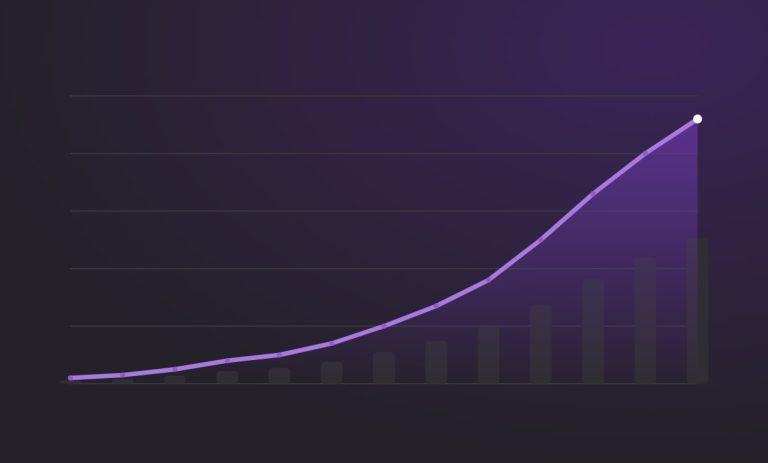
Organic traffic to omegarender.com, Ahrefs estimate, October 2020 – September 2026. Slow early years, a surge in 2023–2024, a peak in May 2025 and a declining estimate from late 2025.
omegarender.com — mentions in AI Overview and ChatGPT answers
DataForSEO LLM Mentions · Aug 2025 – Aug 2026
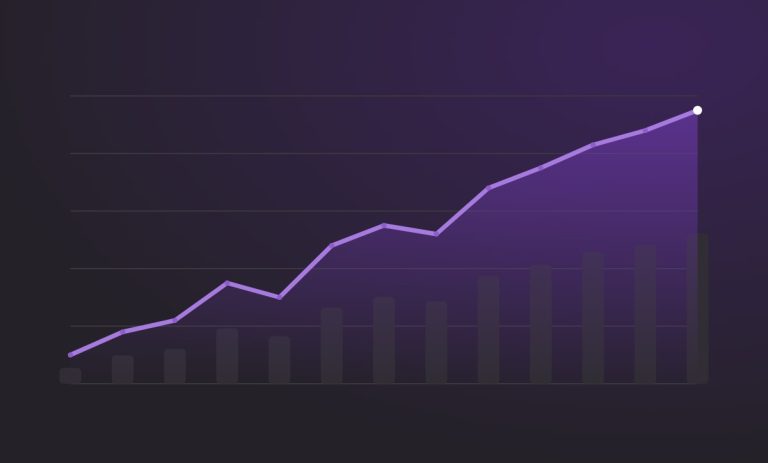
Mentions of omegarender.com in Google AI Overview and ChatGPT answers, DataForSEO, August 2025 – August 2026.
We also keep a separate eye on how AI assistants mention the studio. According to DataForSEO, omegarender.com was mentioned in Google AI Overview and ChatGPT answers to English-language searches in the US 33 times in August 2025 and 64 times in August 2026. Ahrefs estimates fewer clicks from informational queries, while the answers themselves name the studio more frequently.
Why it worked
Three decisions that held up for six years
A queue of directions instead of a single bet
In 2020, together with the client, we split directions into “now” and “later”. We put developers in the queue and came back to them three and a half years later, once the site had gained weight.
One strong page instead of two
Merging the homepage with /3d-rendering-services gathered the link weight in one place. The homepage has links from 865 domains and ranks second for “3d rendering services”.
Demand first, then pages
For new markets and directions we checked demand first, and then built pages, links and mentions for them.
Takeaways
Three tips
- If two pages compete for one query, links won’t help. Merge them with a 301 redirect and check whether the redirect has survived the site’s next migration.
- A hard-to-reach audience is worth putting in the queue. We set some target audiences (and, with them, pages) aside in 2020 and came back to them later, once the site had gained weight.
- When Google answers for itself, one traffic chart isn’t enough. Look at commercial page rankings, target actions and mentions in AI answers alongside it.
What’s next
Omegarender is becoming a marketing partner for developers
In July 2026 the client changed its positioning. Omegarender now sells marketing to property developers (branding, identity, market analysis, campaign launches), and 3D rendering remains one of its services.
Our job is to make sure the new positioning doesn’t break what already works, to bring the new services to market and to encourage LLM mentions in the context that’s right for the client. We also keep working so that the existing “old” services get even more traffic from AI bots too.
Questions
What people ask about long SEO projects
How long did it take to see tangible results?
Traffic nearly doubled in the first year, from 413 to ~785 visits a month. The surge began in summer 2023, and traffic almost tripled over the second half of that year. The peak, 13,632 visits a month, came in May 2025, four and a half years after the start.
Why did traffic in Ahrefs fall if rankings are holding?
Ahrefs estimates clicks from rankings and expected CTR, and for queries with an AI Overview above the results, that estimate is lower. Informational queries dropped the most, while commercial pages hold first and second positions. In 2026 the homepage moved to the new positioning, and the 3D queries are now held by the restored /3d-rendering-services.
Why merge the homepage with a service page if both already had links pointing to them?
The two pages were splitting both the “3d rendering services” query and the links, so neither held a stable position. A 301 redirect passes on link weight, and after the merger one page gets it. Today the homepage ranks second for that query, and 865 domains link to it.
How are mentions in AI answers counted?
DataForSEO counts how many times a domain is mentioned in Google AI Overview and ChatGPT answers to English-language searches in the US. The history goes back to August 2025, and monthly figures range from 16 to 70, so we compare the trend over the year.
Can these numbers be checked?
Yes. Traffic, rankings and the non-branded share come from Ahrefs for omegarender.com, and the domain’s history shows the same curve, including the decline after the peak. Mentions in AI answers come from DataForSEO.