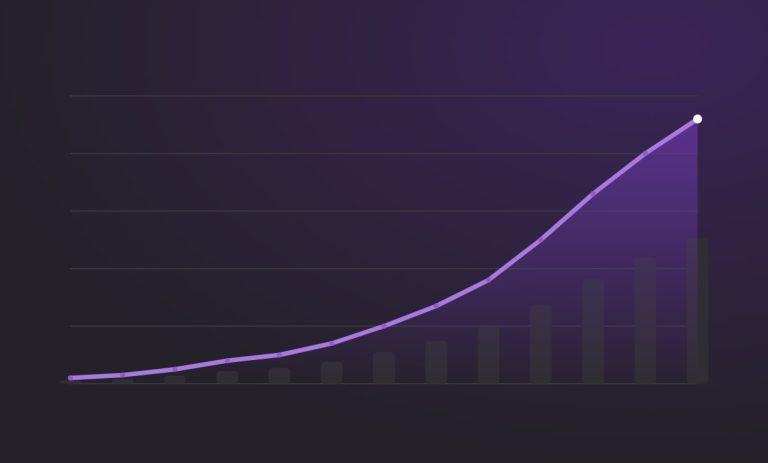
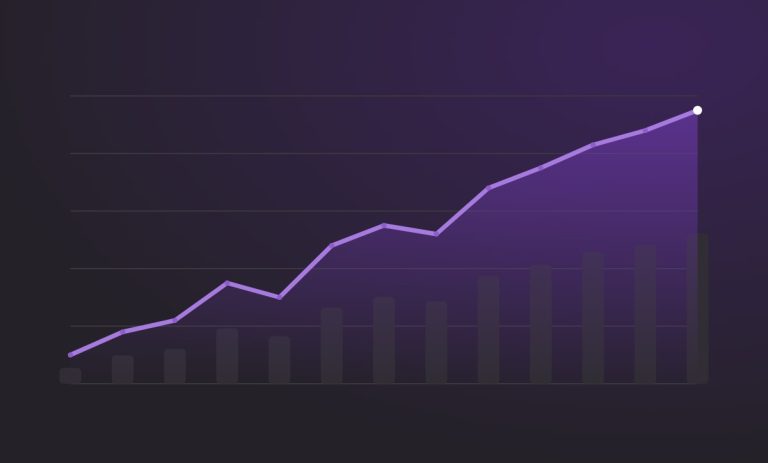
Topflight Apps builds custom apps, above all for healthcare. In May 2020 search brought about 80 people a month to the site, and in September 2025 over 18,000, even though Google updates knocked traffic back twice. The enquiries told the most interesting story, because they come from the homepage and from articles on how to build an app and what it costs, with no service pages among the leaders.
Results at a glance
Search visits a month
80 → 18,056
Ahrefs estimate, May 2020 → September 2025. That’s 226 times more, and over 90% of these visits come from non-branded queries.
US enquiries in two months
+124%
January → March 2023, from the client’s monthly report.
Queries in Google’s Top 10
13 → 3,131
889 of them in the Top 3, where there were 6 at the start. Ahrefs measures rankings directly.
Traffic and rankings come from Ahrefs’ public data for the period of our work, because we don’t publish screenshots of our clients’ analytics.
Before
Healthcare pages search couldn’t see
| Client | Topflight Apps, topflightapps.com |
| Niche | custom mobile and web app development, healthcare focus |
| Markets | US and English-speaking markets |
| Services | SEO, content marketing, link building, technical audits, enquiry analytics |
| Period | May 2020 – September 2025, 65 months |
| Status | ongoing |
| Team | 8 specialists and a project manager |
Topflight Apps builds custom apps for startups and businesses. Its strongest niche is healthcare (telemedicine, patient apps, integrations with medical systems). The typical buyer runs a health startup or a clinic and has a development budget.
In May 2020 the site ranked for 1,176 queries, and 13 of them made the top ten. Search brought in about 80 people a month, and half of them were looking for Topflight Apps by name.
That said, the client came well prepared. It set out straight away what it could do and what it wanted to sell, and had broken healthcare down into sub-niches almost completely. In spring 2020, when COVID moved part of healthcare online, the team started publishing telemedicine pages (telenursing, teleneurology, teledentistry, telepsychiatry, patient appointment booking). In April the client forwarded us a check its writer had run on how these pages ranked. Telenursing was in first place. The rest weren’t working for search yet: some weren’t indexed or carried a technical noindex tag, and for some queries a different page of the site showed up in the results.
So the site lacked authority, both link-based and topical, and the team’s expertise had to be shown the way search expects from medical content.
The goal
Enquiries from US companies with a budget
The owner of a chain of private clinics in the US wants an app for her patients. Before looking for a contractor, she googles how much development costs and how to build a telemedicine app. Whoever has answered those questions stands a chance of getting her enquiry.
Those are exactly the enquiries Topflight Apps needs. The most valuable enquiries for the client come from US companies that already have a development budget. So the goal was enquiries from US companies ready to pay, and the constraints were these:
- healthcare is YMYL, a group of topics where search sets stricter requirements for pages than for an ordinary B2B blog;
- competition in the niche was already above average, and we had to compete with large companies with bigger budgets and more authority.
What we did
Indexing and trust first, then links, then enquiries
May – December 2020
Before scaling up, the healthcare pages had to get indexed and earn Google’s trust
In short, we first settled what we were selling (healthcare), sorted out the indexing of the telemedicine pages and started building trust in the medical content. Traffic grew from ~80 to ~4,000 visits a month over the stage (Ahrefs estimate).
Healthcare as the priority
The client filled in our competency map itself and broke healthcare down into sub-niches almost completely. Each area on the map gets three scores (how easy it is to sell, how profitable it is, whether the market is growing), so the plan was built around what the company earns on. We analysed six target markets, and healthcare became the content plan’s priority. And when the client confirmed it was getting enquiries about HL7 and FHIR (standards for exchanging medical data), those topics went straight into the plan.
Indexing the telemedicine pages
Some of the new telemedicine pages weren’t in the index, some carried noindex, and for some queries a different page of the site showed up in the results. We worked out page by page what was wrong with each and gave technical recommendations in two parts. We checked the HowTo markup on the articles against the content of each page, because markup has to describe the page it sits on. We also added a markup template and a plan for the blog’s tags and categories. There were plenty of small but important fixes like these.
Trust in medical content
Healthcare is YMYL (Your Money or Your Life), meaning topics where a mistake costs health or money, and search sets stricter requirements for such pages. A development studio writing about healthcare has to show E-A-T signals (the author’s expertise, the source’s authority and reliability) explicitly, so we gave YMYL/E-A-T recommendations, and the client started implementing them. The articles were written by the client’s own writer (we ask for that on every project), who really understood the subjects they covered. Briefs and a check of each draft against an SEO and marketing checklist helped keep the quality up and raise it. Among the checklist’s questions:
- is there a hook in the intro;
- are the figures backed by sources;
- is the technical part detailed, describing the real process and challenges.
Guest posts and HARO
A site with 13 queries in the Top 10 had to start earning the trust of topical publications from the first month, so we placed guest articles on sites about development, healthcare and startups each month. We found the sites and negotiated ourselves, copywriters wrote the texts, and we checked them. HARO became a second channel, with the client’s experts answering journalists’ requests.
Contractor directories
Some buyers look for a developer in directories like Clutch, with ratings, reviews and a city filter. There are thousands of sections there, so we worked out where being present made sense. 2,234 sections on development and testing had traffic, 173 of them had paid placements, and we handed the client the list, filtered by US cities, as a presence map.
What the client did. Had started building telemedicine pages before we came on board and filled in the competency map; the articles are written by the client’s writer, and its developers make the changes on the site. Hired a growth marketer and started implementing the YMYL/E-A-T recommendations.
Outcome. The Ahrefs estimate grew from ~80 to ~4,000 visits a month, 50 times; the main jump came at the end of the stage.
January – September 2021
Google updates knocked traffic down almost by half, and we broke the drop down into causes and drew up a plan of fixes
In short, after a core update traffic fell almost by half, and we split the drop into causes outside our control and causes that could be fixed. The stage ended with a diagnosis and a plan of fixes.
A technical audit in parts
Some pages were serving error 500 to the search bot, and Google was just starting to count Core Web Vitals in rankings. So the audit went in parts, each covering its own area:
- server response codes;
- Core Web Vitals, ahead of the Page Experience update;
- crawling and Search Console data.
Breaking down the drop
A drop is easy to blame on a core update, though part of the losses can come from technical issues, and unlike updates, those can be fixed. We split the drop into two causes:
- the core update;
- technical errors still waiting to be fixed.
Under the plan we were to fix them and update the articles that had slipped.
Recovering removed links
Webmasters had removed some of the guest post links placed before our time, and getting an existing link back is easier than finding a new one. So we tracked down missing links and restored them by writing to webmasters, while new publications kept to their own rhythm.
Fintech and crypto
Healthcare stayed the main niche, but the client had good expertise and understanding in Web 3.0 and suggested developing fintech topics (chatbots in fintech, how to launch a neobank).
New areas bring new queries and new buyers, and of course we were all for it. Together with market research we widened the topics to fintech and crypto apps (blockchain development, neobanks), alongside no-code and low-code versus conventional development.
Links after the audit
Before increasing the number of links, we and the client decided to finish the audit and make sure a lack of links really was the cause.
Outcome. The Ahrefs estimate fell from ~4,400 at the start of the stage to ~2,200–2,300, a drop of 48%. The stage ended with a diagnosis and a plan of fixes.
October 2021 – January 2022
Links went up by half, and within three months traffic overtook the previous peak
With the technical causes checked, the client raised the link budget, and over the next three months traffic overtook the previous peak.
More links
In a niche with heavy competition, 7 guest posts a month build rankings, traffic and enquiries slowly. After the audit publications went up to 10–14 a month.
Topics from market research
By then the telemedicine and mHealth data we had relied on had gone stale, and the head of the client company saw the biggest opportunity in DeFi and crypto integrations, since these get built into large apps, which is Topflight’s core service. We updated the market research (telemedicine, mHealth, fintech, blockchain, logistics, fitness for women’s health, education with ML, e-commerce) and the competency map. That produced new topics, NFT marketplaces and veterinary articles among them, and reoptimisations of Doctor Appointment App, Online Pharmacy, Trading & Investment App and Telemedicine App Development Services.
What the client did. Raised the link budget 1.5 times; the company head and the marketer sketched out crypto topics themselves, and at the end of the stage the head set the course for crypto content for the year (popular narratives and layer-one protocols).
Outcome. The Ahrefs estimate grew from ~2,300 to ~6,600 visits a month, 2.9 times, and overtook the previous peak. This coincided with more links and with a Google core update. Enquiries grew too, and a large share of them were now for fintech products, because the industry was going through a real boom.
February 2022 – March 2023
The end of the fintech boom. Even so, US enquiries grew
Demand for crypto topics fell along with the market, and traffic went down. Healthcare remained the client’s main niche, so we concentrated link pressure on it. Meanwhile, US enquiries more than doubled at the end of the stage.
Additional room for growth
We used the growth opportunity in internal linking, because a block of related articles at the end of a text links pages by topic in a systematic way and tells the reader what to read next. So each month we prepared briefs for a Related Articles block (which articles to link with which), and the client took it on, 15 articles a month, starting from the newest.
Focus on the healthcare buyer
Since the crypto and NFT articles were holding their rankings while demand for them (and the enquiries) had fallen, the decision was made to concentrate link pressure on the healthcare articles. That was done, and to choose sites more precisely we researched the healthcare startup CEO:
- who they are (US companies, chains and private clinics);
- what pushes them towards development and what holds them back (from founder interviews);
- which podcasts and sites they read (SparkToro data).
Enquiry tracking
We updated the tracking for each change to the site’s forms. Together with the client we moved to GA4 and set up events (meeting booking, meeting page, lead magnet).
Light updates and a link audit
When rankings slip a little across the whole site at once, rewriting articles from scratch is premature; refreshing the text and checking links is enough. So for a dip that coincided with a seasonal drop in impressions we did light article updates and a link audit. Removed, unindexed and nofollow links went for reindexing and into letters to webmasters, and we added 730 domains of automated spam to the disavow file.
What the client did. Implemented Related Articles (15 articles a month, up to 5 links, some placed within the text). Moved to GA4 together with us and replaced the booking widget with a form at /request-meeting.
Outcome. According to the client’s report, US enquiries rose 124% at the end of the stage, with a clearly larger share of qualified ones. The Ahrefs estimate fell 56% over the stage (~5,200 → ~2,300), although organic traffic in the client’s analytics was almost flat in the last months of the stage, so here the estimate diverges from GA.
April – October 2023
Strengthening and expanding
Hidden gems
A buyer lands on one page and leaves an enquiry on another, so it’s better to attribute the source to the first page viewed. Obviously, those are exactly the pages to strengthen and deepen once a lot of content on the topic has already been written.
This calls for a close look at analytics and, ideally, at real requests from clients, because, as happens a lot in B2B, pages with almost zero traffic according to external tools bring in enquiries.
What’s more, these are exactly the pages competitors tend not to create, because “there’s no traffic there”.
It’s critically important to understand your buyer’s real needs and create content for them, even when the tools say otherwise.
Backing the pages that sell
When the budget is limited (and when isn’t it?), it pays more to invest in pages that already bring in enquiries, because after climbing a few positions they’ll bring in more leads. So reoptimisations and links went first to pages with enquiries.
The same budget, more links
Within the same budget we got more links: on top of 10 guest posts a month we added 3–5 placements on more affordable sites and selective link exchanges with sites on adjacent topics.
Technical mini-audits
The Unbounce landing page builder was creating empty technical pages that wrapped links, and mobile speed could be improved. So we handed the developers LCP on mobile, then H1s on archives, 404s and soft 404s, and advised removing the redundant Unbounce pages or returning 404 or 410 for them.
Outcome. The Ahrefs estimate grew from ~3,400 to ~7,600 visits a month, 2.2 times; organic traffic in the client’s analytics grew too. At the end of the stage there were the most meetings and qualified meetings of the year, brought in by healthcare queries. The jump at the end of the stage coincided with a core update and the Helpful Content Update.
November 2023 – December 2024
After a core update traffic came back above the previous peak, and in parallel we launched SEO for the client’s new product
In short, after the core update we broke the losses down by page and rescued the most important ones, and we led the buyer through an “EHR implementation” cluster. The link budget was limited and started being split between two sites, because the client had also launched a product. Even so, traffic reached a new high.
Core update analysis by page
After the core update many queries slid from positions 1–3 to 4–10, and the top three positions take most of the clicks. The losses were spread unevenly (102 pages lost traffic, only 11 gained), so we broke them down by page and started with the ones hit hardest. Technical mini-audits followed (markup, Core Web Vitals, 404s from Search Console). In parallel we dealt with technical incidents.
An “EHR implementation” cluster
Topics from sales calls are valuable, because they’re in the buyer’s own language. So we found a topic that covers all the specific requests from real clients and that the same buyer searches for, and covered it as an “EHR implementation” cluster (cost, challenges, benefits).
A second site
The client launched a second product and had us focus on it. The link budget was limited. A new domain starts with no history or trust, so we ran both sites. For the product we built its own content plan, first briefs and publications and set up GA4, while the main site kept getting new articles and reoptimisations each month.
Outcome. Commercial healthcare queries started moving. In one month meetings doubled compared with the month before (wearables in healthcare, EHR implementation and branded queries), and the share of qualified enquiries grew noticeably. The Ahrefs estimate rose from a low of ~4,300 to a new high of ~9,000, 2.1 times.
January – September 2025
Search is moving into AI answers, so we rewrote for them only the articles that already bring in enquiries
In short, search answers more and more queries with an AI Overviews block, and we reoptimised for it the pages that already bring in enquiries. In parallel we kept up the technical health and analytics of both sites.
Reoptimising for AI Overviews and LLMs
The AI Overviews block started appearing for queries that mattered to us. So, after carefully analysing hundreds of results, we built our own process for how exactly to change article content to get into that block.
Outcome. The Ahrefs estimate grew from ~8,100 to 18,056 visits a month, 2.2 times. At the end of this stage there were 3,131 queries in the Top 10 and 889 in the Top 3 (13 and 6 at the start of the work), and 91.3% of traffic was non-branded. The stage brought the most qualified enquiries in 36 months.
What was hard
Growth came in steps
Two drops after Google updates
After Google updates traffic fell noticeably twice, by almost half in 2021 and after a core update at the end of 2023. Each time we looked for the causes that could be fixed, and each time the curve came back above the previous peak (~6,600 in December 2021, ~9,000 in November 2024).
A tight link budget
The link budget was limited, and from October 2024 it was split between two sites. So links went first to pages that already bring in enquiries, and before going after new competitive queries we worked out the cost in links and months.
After
226 times the traffic, and the enquiries come from articles
| Before | After |
|---|---|
| 80 search visits a month, half of them by company name | 18,056 visits a month, 91.3% from non-branded queries |
| 13 queries in the Top 10, 6 in the Top 3 | 3,131 in the Top 10, 889 in the Top 3 |
| 1,176 queries the site ranked for in Google at all | 10,385 queries |
| Priorities set by traffic and rankings | Priorities set by which pages bring in enquiries |
topflightapps.com/ — Avg. organic traffic
Ahrefs · 1 May 2020 – 30 Sep 2025
Organic traffic to topflightapps.com, Ahrefs estimate, May 2020 – September 2025. A jump in autumn 2020, a slump in summer 2021, steps through 2022–2024 and a peak in September 2025.
According to the client’s data, US enquiries rose 124% from January to March 2023. October 2023 brought the most meetings and qualified meetings of the year. The bet on healthcare as the client’s biggest area of expertise, made back in 2020, paid off.
Why it worked
What kept growth going for five years
Focus on core expertise
Developing the most important direction, with the team’s own training and expertise focused on it as well as the marketing effort, may well be the most valuable thing.
Answers to the buyer’s questions
The “how to build” and “how much it costs” articles came with briefs and draft reviews (a hook, figures with sources, a technical section without filler). After the homepage, they top the list of enquiry sources.
A great marketer and copywriter on the client’s side
The client’s copywriter knows the problems and challenges of healthcare development in depth, which gave the project content that converted. The client’s marketer gave us great, deep insights, which we worked up and took through to production.
Takeaways
Three lessons for companies that sell development
- In B2B, enquiries come from answering the buyer’s question. Ideally, you need a list of the questions buyers ask. Those questions then turn into content that actually converts into enquiries.
- Count enquiries. Without that, optimisation follows traffic, and it’s unclear what to support first.
- Aim precisely. As ever, most clients are found where your best expertise, a growing market, the expected deal size and competition you can take on with the resources you have intersect.
What’s next
The partnership continues
The project is ongoing, and we’ve worked with Topflight Apps since May 2020. Despite the challenges that inevitably come with any project this complex in today’s conditions, we keep making the project a success together.
Questions
What people ask about this case
How long did it take to see the first results?
For the first four months traffic grew slowly, from 80 in May to about 840 visits in September 2020. The jump came in October and November, and by the end of the year traffic reached about 4,000 visits a month.
Why did traffic grow in steps?
Google updates knocked traffic back twice, in summer 2021 and in autumn 2023. Each time we broke the losses down by page, checked the site’s technical health and updated the articles that had slipped, and each time the curve came back above the previous peak.
Why do articles bring in the enquiries?
A buyer of custom development first works out the problem (what it costs, how to build an MVP, what telemedicine requires). Articles answer exactly those questions, and that’s where getting to know the brand begins. In the client’s report, the fourteen pages bringing in the most enquiries are the homepage and thirteen articles.
Do you work with AI Overviews and AI answers?
Yes. On this project, from May 2025 we rewrote the articles that bring in enquiries month by month, so that the AI Overviews block and LLMs could quote them.